
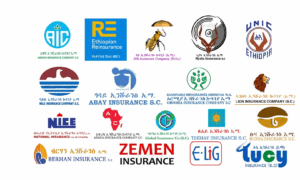
Ethiopia is preparing a sweeping reform of its insurance sector through a new draft proclamation that could fundamentally reshape the industry, introducing foreign participation, an independent regulator, and a regulatory sandbox for innovation.
The draft law, currently under consultation and reviewed by Ethiopian Business Review, would repeal the existing 2012 Insurance Business Proclamation and its 2019 amendment, marking the most significant overhaul of the sector in more than a decade.
For the first time, the proposal would allow foreign insurers to enter the Ethiopian market through subsidiaries, equity participation in existing firms, or representative offices. However, ownership would remain controlled: strategic foreign investors would be capped at 40 percent, while non-strategic foreign individuals and entities would be limited to 7 percent and 10 percent, respectively. Total foreign ownership in any insurer would not exceed 49 percent.
The draft also requires initial capital injections in foreign currency, although profits could later be reinvested in Ethiopian birr.
A central pillar of the reform is the creation of the Ethiopian Insurance Regulatory Authority (EIRA), an autonomous body that would assume supervisory responsibility from the National Bank of Ethiopia, signaling a shift toward a more specialized and independent regulatory framework.
In a bid to foster innovation, the law introduces a regulatory sandbox—allowing companies to test new insurance products and services in a controlled environment under regulatory oversight. This would be a first for Ethiopia’s financial sector.
The draft further formalizes the legal framework for Takaful (Islamic insurance) and Re-Takaful, including Sharia-compliant governance structures, while also introducing a new “Inclusive Insurer” license aimed at expanding coverage to underserved and informal market segments.
To strengthen financial stability, the proposal outlines a resolution framework for distressed insurers, including mandatory recovery plans and provisions for establishing “bridge insurers” to maintain critical operations. Companies would also be required to establish dedicated functions for risk management, compliance, actuarial services, and internal audit.
Strict enforcement measures are included, with penalties of up to 15 years in prison for operating without a license.
The draft also provides transitional protections, allowing foreign nationals of Ethiopian origin who previously invested in the sector to retain their domestic status. Meanwhile, banks and microfinance institutions currently offering microinsurance services would be required to obtain new licenses.
If approved by the Council of Ministers and Parliament, the law would come into force upon publication in the Federal Negarit Gazeta.
The insurance reform is bigger than just an update to the insurance sector — it is another signal that Ethiopia is rebuilding its entire financial architecture around transparency, capital markets, and institutional regulation.
According to the draft reforms and related directives issued by the National Bank of Ethiopia (NBE), the country is moving toward stricter governance, foreign participation, risk-based supervision, and more disclosure-driven financial systems.
—
Why This Reform Matters Beyond Insurance
Ethiopia’s insurance sector has historically been small, underpenetrated, and heavily relationship-driven. Insurance penetration remains around 0.3% of GDP compared to the African average of 3.6%.
That gap matters because modern economies rely on insurance markets to absorb risk, mobilize savings, and support investment.
This reform suggests Ethiopia is trying to transform insurance from a passive financial service into a core capital-market institution.
—
1. The Reform Is Preparing Ethiopia for Larger Capital Flows
The timing is important.
The insurance reform comes shortly after:
the launch of the Ethiopian Securities Exchange,
Treasury Bill secondary market trading,
licensing of investment banks,
and broader banking liberalization efforts.
This suggests the government is building interconnected financial institutions rather than isolated reforms.
A stronger insurance industry helps:
institutionalize long-term savings,
create future institutional investors,
support bond markets,
and increase confidence in financial assets.
Globally, insurance firms are often among the largest investors in government bonds, infrastructure, and stock markets. Ethiopia appears to be laying foundations for the same evolution.
–
2. Foreign Participation Could Change Industry Competition
The proposed opening to foreign investors is potentially transformative.
Foreign insurers could introduce:
advanced underwriting models,
digital insurance systems,
actuarial expertise,
reinsurance access,
agricultural and climate-risk products,
and stronger governance standards.
For domestic insurers, this creates both opportunity and pressure.
Large local firms with strong capital and governance may benefit through partnerships and technology transfer.
Smaller or weaker insurers may struggle with:
compliance costs,
capital requirements,
competition on pricing,
and operational efficiency.
This could eventually lead to consolidation in the sector.
—
3. Stronger Governance Signals “Market Readiness”
One of the most important elements is the “fit and proper” governance framework for:
shareholders,
board members,
executives,
and auditors.
This matters because Ethiopia is transitioning from relationship-based finance toward rules-based finance.
Investors — especially institutional and foreign investors — typically look for:
disclosure standards,
auditor independence,
regulatory enforcement,
and governance accountability.
The reform directly addresses these areas.
This mirrors the same direction seen in:
ECMA licensing rules,
AML/CFT directives,
risk-based capital regulations for banks,
and securities exchange supervision.
Together, these reforms indicate Ethiopia is trying to align with international financial standards.
—
4. Insurance Could Become a Major Capital Market Player
A deeper insurance market can significantly influence the capital market.
Insurance companies typically become:
major bond buyers,
long-term equity investors,
infrastructure financiers,
and liquidity providers.
As Ethiopia’s capital market develops, insurers may eventually:
invest in listed equities,
purchase corporate bonds,
participate in infrastructure financing,
and support pension-linked investment products.
This creates a feedback loop: Stronger insurance sector → deeper capital market → more investment products → broader investor participation.
—
5. The Reform Also Carries Risks
While positive structurally, execution risk remains significant.
Challenges include:
limited technical expertise,
weak actuarial capacity,
compliance burdens,
low public trust in financial systems,
and limited financial literacy.
Public skepticism around regulation and transparency is still visible in discussions surrounding the Ethiopian capital market. Some investors remain concerned about enforcement quality, insider influence, and institutional credibility.
If enforcement is inconsistent, reforms may exist on paper without fully changing market behavior.
—
6. The Bigger Signal: Ethiopia Is Moving Toward Institutional Finance
The broader message is that Ethiopia is gradually shifting away from a bank-dominated, state-centered financial system toward a diversified financial ecosystem.
Recent reforms across:
banking,
insurance,
treasury markets,
investment banking,
and securities trading
all point in the same direction: creating modern financial intermediation mechanipsms capable of mobilizing domestic and eventually foreign capital at scale.
This reform is therefore not just about insurers. It is part of Ethiopia’s long-term transition toward a more market-based economy.
Super fast loading times and the graphics are top notch. It feels like a real casino right on my phone. Give ph998jili a go!
Best gaming experience I’ve had in a while! The interface is super intuitive and I love the variety of games. Check out pk21game if you want a reliable platform.
Really convenient app for anyone on the go. The layout is clean and everything works exactly as it should. Download nutristarapp and see for yourself.
Finally found a site that doesn’t lag during peak hours. The login process is seamless and the game variety is impressive. Highly recommended for slot lovers. batikslotlogin
If you are looking for high win rates, this is the place to be. I just hit a nice jackpot and the withdrawal was instant. slotgacor777 is legit.
The slots here are so exciting and the jackpot feels reachable. I am having a great time on fp777slot.
Solid platform with a very professional feel. I feel safe depositing my funds here. Cheers to armorbet78.
The download was fast and the installation was a breeze. The graphics are top notch and it runs perfectly on my device. Get it now at y666gamedownload.
I’ve tried a few sites recently but this one is definitely smoother. The interface is clean and the wins feel fair. Highly recommend checking out idslotaladin if you want a reliable spot.
Top notch experience so far. The graphics are crisp and the winning streaks are real. I’ll be spending a lot more time here for sure. vnlf168