
Ethiopia’s interbank money market has surpassed ETB 4 trillion in cumulative transactions, marking a significant milestone in the country’s transition toward market-based liquidity management.
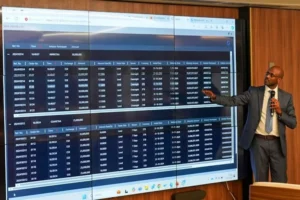
According to data published by the Ethiopian Securities Exchange (ESX), cumulative trading reached ETB 4.09 trillion, less than two years after the market began operations on October 31, 2024.
The milestone reflects growing participation by commercial banks in organized short-term borrowing and lending, providing an alternative to traditional bilateral liquidity arrangements.
Unlike the equity market, where investors trade company shares, the interbank money market enables eligible financial institutions to borrow and lend funds over short periods under the National Bank of Ethiopia’s (NBE) regulatory framework.
From ETB 1 Trillion to ETB 4 Trillion
The market’s expansion has accelerated over the past year.
In September 2025, ESX reported that cumulative transactions had exceeded ETB 1 trillion. By June 2026, the figure had reached ETB 3 trillion before climbing to ETB 4.09 trillion on October 21.
This represents an additional ETB 1.09 trillion in cumulative trading since June, highlighting the increasing role of the market in banks’ liquidity management.
However, cumulative turnover does not represent outstanding interbank loans. It measures the total value of transactions conducted since the market’s establishment, including funds repeatedly borrowed and lent.
Weekly Trading Reaches ETB 41.75 Billion
The latest completed weekly statistics, covering October 12–16, 2026, show that banks traded ETB 41.75 billion through overnight and seven-day transactions.
Seven-day borrowing dominated activity, accounting for ETB 38.2 billion across 47 transactions, or approximately 91.5% of weekly turnover.
Overnight trading totaled ETB 3.55 billion across five transactions.
Borrowing costs also declined during the week. The weighted-average overnight interest rate fell to 12.296% from 13% in the preceding week, while the seven-day rate decreased to 12.882% from 13%.
The figures suggest easing short-term borrowing costs, alongside a stronger preference for seven-day funding arrangements during the reporting period.
Why the Market Matters for Banks
The growing interbank market provides Ethiopian commercial banks with an additional mechanism for managing temporary liquidity shortages and deploying surplus funds.
Liquidity is not evenly distributed across the banking system. While some banks hold excess cash, others face short-term funding pressures arising from withdrawals, lending activities or settlement obligations.
Through organized interbank trading, surplus institutions can earn interest income by lending to banks requiring temporary financing.
Borrowing banks, meanwhile, gain access to short-term funds without necessarily reducing lending activities or liquidating investments.
Nevertheless, greater access to interbank funding does not eliminate liquidity risks. Banks must continue managing counterparty exposure, borrowing costs and potential funding disruptions during periods of financial stress.
Implications for Monetary Policy
The market’s expansion also supports the NBE’s efforts to modernize monetary policy implementation.
As Ethiopia develops a more market-oriented financial system, interbank interest rates can provide important signals about liquidity conditions and funding costs.
A functioning money market can strengthen monetary policy transmission by allowing changes in central bank policy rates to influence commercial banks’ borrowing costs.
The International Monetary Fund has also identified interbank market development as an important component of Ethiopia’s financial-sector reforms.
However, effective transmission will depend on broader participation, competitive pricing and more efficient liquidity distribution across institutions.
Beyond the ETB 4 Trillion Milestone
Despite its rapid growth, cumulative turnover alone does not establish the depth or efficiency of Ethiopia’s interbank market.
A relatively small number of banks could account for substantial trading volumes, while repeated borrowing between the same institutions could inflate cumulative activity without broadening market participation.
Assessing the market’s development therefore requires additional indicators, including the number of active banks, transaction concentration, outstanding exposures and differences in borrowing costs.
The market’s expansion also has implications beyond banking. More reliable short-term interest rates could eventually support the pricing of government securities, corporate debt and other financial instruments as Ethiopia’s capital market develops.
For Ethiopia’s financial sector, the ETB 4 trillion milestone demonstrates growing trading activity. The next challenge is ensuring that this growth translates into deeper liquidity, competitive interest-rate formation and stronger financial stability.
The login process is seamless and the account management is very secure. I feel safe playing here and the rewards are generous. Visit studiobet78login today.