
National Bank of Ethiopia Deploys Historic $500 Million FX Auction to Anchor Currency Reforms
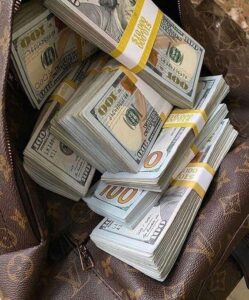
Ethiopia’s central bank is preparing to unleash one of its boldest interventions yet in the country’s foreign exchange market. On Tuesday, May 19, the National Bank of Ethiopia (NBE) will conduct a special auction worth $500 million — a figure that dwarfs its usual liquidity operations and signals a new phase in the government’s push toward a market‑oriented economy.
Commercial banks have been instructed to submit bids electronically within a narrow two‑hour window, from 10:00 AM to noon. Results will be announced at 3:00 PM, with settlements finalized before the close of business. The compressed timeline underscores the urgency of the move and the central bank’s determination to inject clarity into a market often clouded by speculation.
A Departure from Routine
Ordinary auctions in recent months have typically involved allocations of $50–60 million. By scaling up nearly tenfold, the NBE is shifting from routine liquidity smoothing to a structural injection designed to reset expectations. The last time the bank attempted such a large‑scale auction was on February 21, 2026, when $500 million was offered but only $455 million was taken up. That undersubscription raised questions about whether Ethiopia’s banks were truly starved of dollars or whether demand had begun to normalize.
By returning with the same volume now, the central bank is effectively retesting the market. Has demand rebounded in the intervening months? Or have commercial banks adjusted to a more liquid environment, supported by rising exports, stronger remittance inflows, and record gold deliveries?
Timing and Strategy
The timing of this auction is deliberate. After February’s intervention, the NBE resisted calls to establish a rigid schedule of bi‑weekly auctions. Instead, it opted for a cautious pause, allowing the market to self‑regulate through the first quarter. Officials monitored inflows closely, waiting to see whether natural supply could ease pressure without heavy state involvement.
That wait‑and‑see strategy now gives way to decisive action. By releasing half a billion dollars, the NBE aims to clear backlogs of Letters of Credit, ease supply bottlenecks, and reduce inflationary spillovers from the parallel market. Importers in critical sectors — manufacturing, pharmaceuticals, fuel, and industrial inputs — stand to benefit most, as they have long struggled with delays in accessing foreign currency.
Market Implications
The auction is not just about liquidity; it is also about price discovery. Analysts will be watching the clearing rate closely. Earlier auctions settled around 154–155 Birr per USD. If tomorrow’s auction clears significantly higher, it would confirm pent‑up depreciation pressure on the Birr. A stable rate, by contrast, could reassure markets that the central bank has the tools to anchor expectations.
For banks, the stakes are high. Institutions that secure larger allocations will gain a competitive edge, enabling them to settle supplier payments faster and attract corporate clients hungry for trade financing. The scramble for dollars will force treasuries to recalibrate their liquidity positions and pricing strategies in real time.
The move also aligns with recommendations from international financial institutions, which have long urged Ethiopia to adopt tran6ÿsparent, market‑driven currency allocation. Rigid administrative rationing, they argue, distorts incentives and fuels parallel market activity. By embracing competitive auctions, the NBE is laying the groundwork for a more credible financial system.
If successful, the intervention could narrow the spread between official and parallel market rates, establish a transparent baseline for dollar pricing, and attract foreign portfolio investors to Ethiopia’s nascent capital markets.
Risks and Challenges
Still, risks remain. Burning through reserves too quickly could leave the central bank exposed if external shocks hit — for example, a sudden drop in export earnings or a slowdown in remittances. There is also the question of sustainability: can Ethiopia maintain such large injections on a regular basis, or will they remain occasional shock‑absorbers?
Moreover, the auction’s success depends on efficient distribution. If allocations are concentrated in a handful of banks, smaller institutions could be left struggling, undermining the broader goal of stabilizing the system. Transparency in settlement and reporting will be critical to maintaining confidence.
A Turning Point
For Ethiopia’s business community, tomorrow’s auction represents more than just numbers on a balance sheet. It is a test of whether the country’s financial architecture can evolve toward openness and predictability. Importers, exporters, and investors alike will be watching closely, not only to see how the Birr performs but also to gauge the central bank’s resolve in steering reforms.
In the words of one Addis Ababa‑based treasury manager, “This auction is not just about clearing backlogs. It’s about proving that the system can work in a way that businesses can trust.”
If the NBE succeeds, the $500 million injection could mark a turning point — a moment when Ethiopia’s currency market begins to shed its reputation for opacity and volatility, and instead becomes a platform for growth and investment.
With the pause finally broken, this aggressive injection of hard currency directly targets the structural foreign exchange shortages that have constrained the Ethiopian business community for years. Importers across strategic, high-priority sectors—including manufacturing, pharmaceuticals, fuel, and industrial inputs—have routinely battled severe delays in accessing foreign currency. By releasing a half-billion dollars into the banking system, the NBE aims to aggressively clear outstanding Letter of Credit (LC) backlogs, ease supply-side bottlenecks, and ultimately dampen inflationary pressures leaking from the parallel currency market.
Beyond immediate liquidity relief, the auction serves as a high-stakes mechanism for real-time price discovery. The financial sector will be closely analyzing the weighted average clearing rate that emerges from the bidding process, keeping a close eye on how it compares to recent auction clearing baselines which sat near the155 Birr per USD mark earlier in the year. If the auction clears at a rate significantly higher than those levels, it will signal deep, pent-up depreciation pressure on the Ethiopian Birr. Conversely, a stable clearing rate could anchor volatile market expectations and bolster institutional confidence in the central bank’s capacity to manage currency volatility. Ultimately, the data will provide invaluable transparency regarding true corporate dollar demand and short-term macroeconomic sentiment.
For commercial banks, the auction triggers a highly competitive scramble for allocations. Institutions that secure larger portions of the $500 million pool will gain an immediate competitive advantage, enabling them to settle supplier payments faster and capture market share from corporate clients waiting on trade financing. However, the sudden movement of capital will also force corporate treasuries to quickly realign their interbank liquidity positioning and recalibrate their short-term pricing strategies. If distributed efficiently, the injection should offer swift relief to businesses waiting on delayed import settlements.
On a broader scale, this intervention satisfies a long-standing recommendation from international financial institutions and development partners, who have consistently advocated for transparent, market-driven currency allocation over rigid administrative rationing. If the NBE can successfully stabilize the economy through these massive, periodic injections, it will fundamentally redefine Ethiopia’s financial architecture. By narrowing the spread with the parallel market and establishing a transparent baseline for dollar pricing, the NBE is laying the foundational infrastructure necessary to attract long-term foreign portfolio investment to Ethiopia’s emerging capital markets.
—
I really love the interface of this app. It is smooth and the payouts are surprisingly fast. Definitely my new favorite spot to play! cassino222app
Big wins and great fun. I love the variety of slots and table games they offer. 777win97casino is definitely one of the best in the game.
This site is a hidden gem. The graphics are crisp and the gameplay is just addictive. If you are looking for something fresh, try vnzx88acom.
Solid platform with a great selection of games. I had a big win last weekend and the withdrawal was processed almost instantly. bdck777bet
If you are looking for a VIP experience with great rewards, this is the spot. Everything from registration to withdrawal was seamless. I’m really happy with f1688vip.
Really impressed with the graphics and the overall feel of the games. It feels very professional and fair. You should definitely visit inztlgames.